
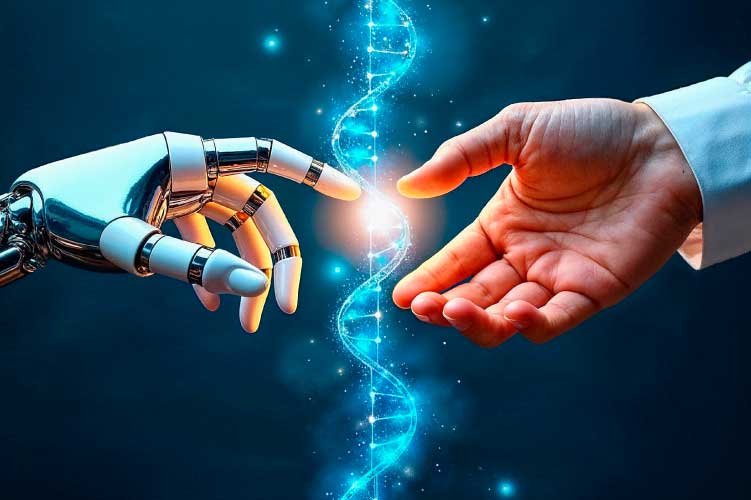

If you walk into a modern hospital today, you may notice something different. Not just doctors and nurses — but screens, smart devices, automated systems, and AI tools quietly doing a lot of work in the background.
Artificial Intelligence isn’t the future anymore. It’s already here, and hospitals are using it every single day.
Here’s how AI is changing healthcare in 2025 in a practical, real-world way.
1. Faster and More Accurate Diagnosis
Doctors are now using AI tools to scan X-rays, CT scans, and MRIs.
Instead of manually checking every detail, AI highlights suspicious areas instantly.
What this means:
-
Early detection of diseases
-
Fewer diagnostic errors
-
Quicker treatment decisions
Radiologists say AI acts like a “second pair of eyes,” helping them catch things humans can miss.
2. AI-Powered Patient Monitoring
Hospitals are installing smart sensors that constantly monitor patient vitals like:
-
Heart rate
-
Oxygen levels
-
Respiratory patterns
-
Blood pressure
AI alerts the medical team before a patient’s condition becomes critical.
It’s like having a 24/7 medical assistant who never gets tired.
3. Smarter Hospital Management
AI helps hospitals:
-
Reduce waiting time
-
Manage patient flow
-
Predict OPD rush hours
-
Optimize staff shifts
Patients get faster service, and hospitals run more efficiently.
4. Personalized Treatment Plans
AI studies a patient’s health record, lifestyle, allergies, and past treatments.
Then it helps doctors create a customized treatment plan instead of a one-size-fits-all approach.
This is especially helpful for:
-
Diabetes
-
Heart disease
-
Cancer
-
Chronic illnesses
5. AI Chatbots & Virtual Assistants
Many hospitals now use chatbots for:
-
Appointment booking
-
Pre-consultation questions
-
Medicine reminders
-
Basic symptom guidance
This reduces the load on support staff and improves patient experience.
Final Thoughts
AI isn’t replacing doctors — it’s enhancing them.
Hospitals in India are adopting AI faster than ever, and the result is safer, quicker, and more accurate patient care.
As technology grows, businesses supplying medical equipment (like AlphaDist) will play a key role in supporting the modern healthcare ecosystem.






0 Comments